One-Page Marketing Plan and Weekly Planner for Nonprofits
A free one-page marketing plan template and weekly planner for small nonprofits, with one goal, one audience, the channels your hours allow and the number to watch each month.
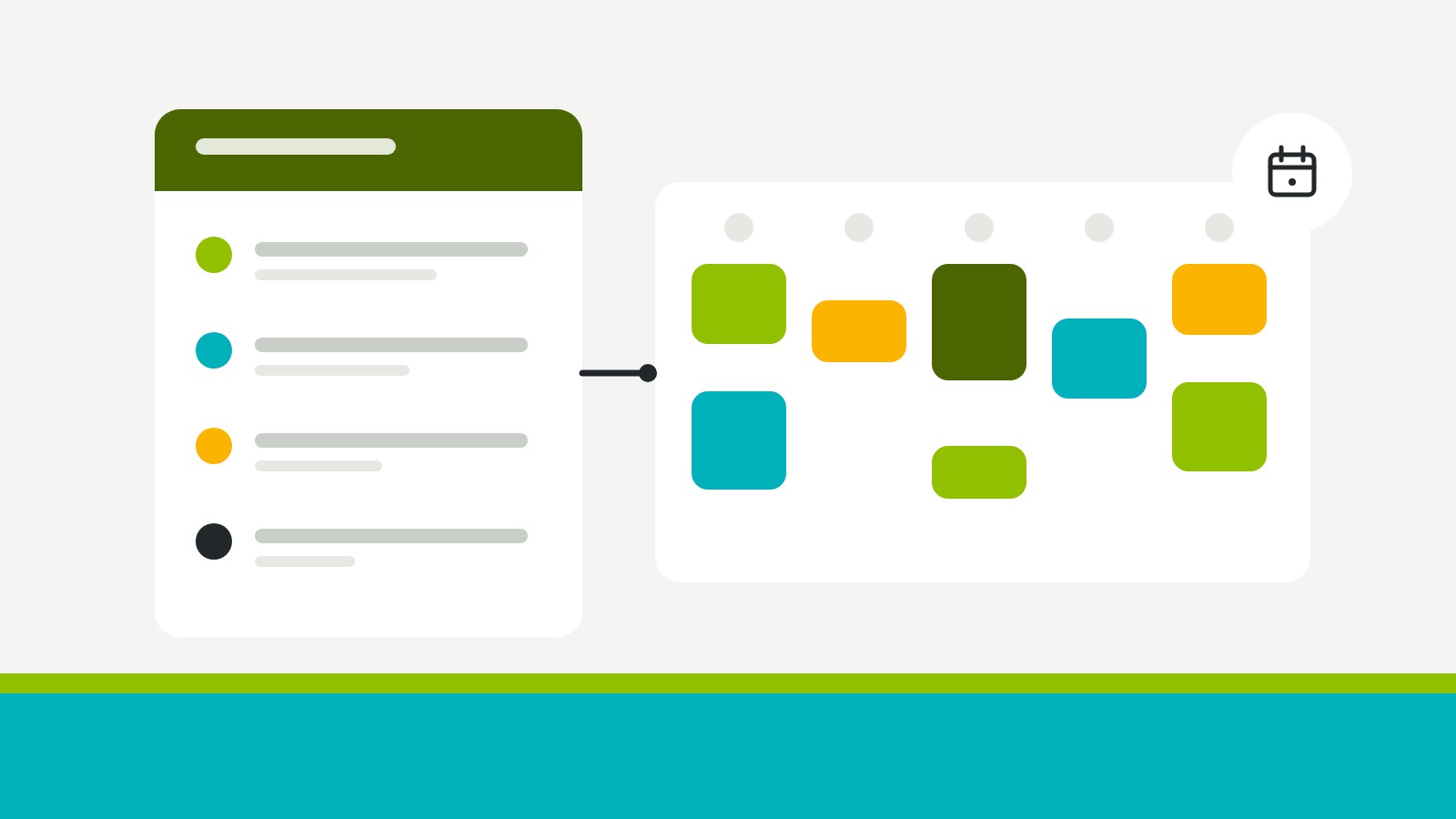
- A one-page plan with one goal, one audience, one message and a few channels gets used every week, while long strategy documents rarely do.
- Channels should match the hours a small team can really protect, with email and a clear website page as the base.
- One number reviewed monthly and a fifteen-minute quarterly check keep the plan honest without resetting the routine.
A small nonprofit gets more from a one-page marketing plan it opens every week than from a long strategy document it never reads again, because the short plan turns straight into a weekly routine.
Most supporters are waiting to hear from you. 50% of Americans don't remember being asked to give in the past year, which says less about generosity than it does about how rarely people hear a clear, steady message from the causes they'd back. A plan that keeps that message going every week closes that gap, and it doesn't need a marketing department to run.
The plan below fits on a single page and builds in about an hour. Use the free plan builder to fill it in, then keep it next to your calendar. If you'd like the engine behind it built for you, skilled help is available in kind.
What a one-page nonprofit marketing plan includes
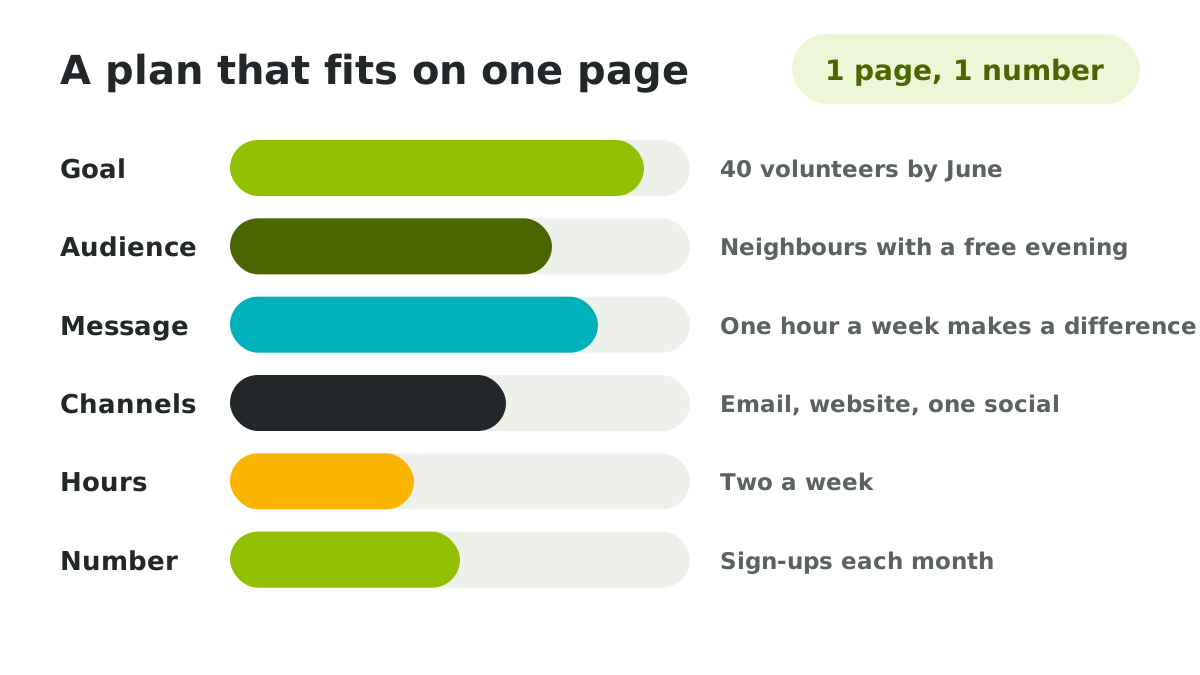
A one-page marketing plan names one goal, one audience, one message, two or three channels, the hours you'll spend each week and the number you'll watch. That's all a small team needs to make weekly decisions without rereading a strategy deck.
| Plan section | What to write | Example from a literacy program |
| Goal | One result you want in the next twelve months, with a number | Recruit 40 new reading volunteers by June |
| Audience | The people who can make that goal happen | Retired teachers and parents within 20 kilometres |
| Message | One sentence that tells them why to act now | One hour a week gets a child reading at grade level |
| Channels | The two or three places that audience already pays attention to | Monthly email, a volunteer page and one local Facebook group |
| Weekly hours | The time you can really protect every week | Two hours, split across four short tasks |
| Number to watch | The single measure that shows the goal moving | Volunteer sign-ups each month |
Why long marketing plans go unused at small nonprofits
Long plans go unused because nobody has time to translate them into this week's work. A thirty-page document written during a retreat answers big questions well and leaves the comms lead with no idea what to do on Tuesday.
Time is the real constraint. Nearly 90 percent of nonprofit leaders express concern about their own burnout, and a similar share say it's affecting their staff. A plan that adds reading to a stretched person's week will lose to the next urgent email every time. A plan that fits on one page, sits beside the calendar and turns into four tasks a week has a chance of surviving March.
There's still a place for the big strategy. Keep it for board conversations and grant applications, and let the one-page plan run the weeks.
Let the one-page plan run the weeks.
Choosing one goal for the next twelve months
Choose the one result that would make the biggest difference to your programs this year and give it a number. More monthly supporters, more volunteers, more program sign-ups or more people reached all work, as long as you pick one and say how many.
An animal rescue might want everything at once, from adoptions to foster homes to gifts. If foster homes are the bottleneck that limits every other number, the goal is 25 new foster homes by fall. Adoptions and gifts still happen, yet the weekly marketing effort goes into the thing that frees up the rest.
Picking the audience and message that serve the goal
Pick the specific people who can make the goal happen, then write one sentence that tells them why to act. The audience should be narrow enough that you can picture a real person, and the message should answer the question they'd ask first.
A youth sports charity chasing 30 new volunteer coaches doesn't need to reach everyone in town. Its audience is former players and sports parents with a free evening. Its message is that two practices a week keep a team running and no coaching certificate is needed to start. That sentence goes on the volunteer page, in every email and at the top of each post.
Write the message in the words your audience uses. If they say "help coach", don't write "volunteer engagement opportunities".
Matching channels to the hours you really have
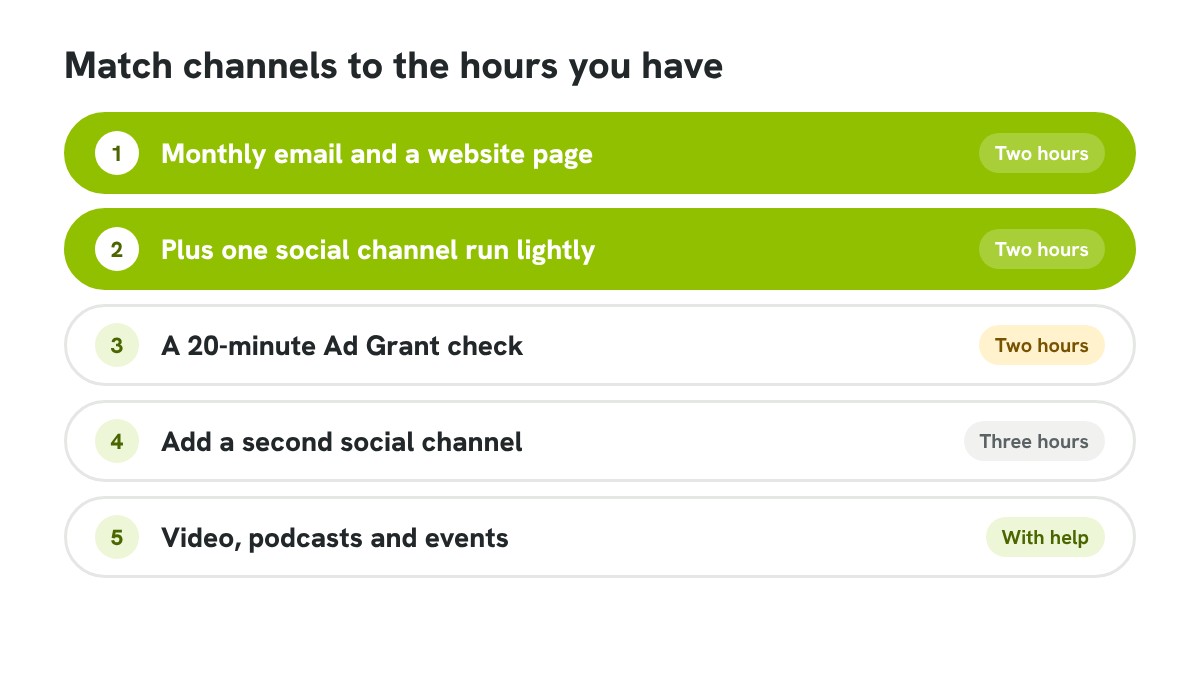
Pick channels by the hours each one needs and the audience it reaches, then drop the rest. A monthly email and a clear website page are the base for almost every small nonprofit. A third channel earns its place only if the hours allow and your audience is really there.
Two hours a week covers an email, a website page and one social channel run lightly, with room for a short Google Ad Grant check if you have the grant. Three or four hours adds a second social channel or event promotion. Anything beyond that needs either more time or help, and pretending otherwise is how plans quietly stop.
Turning the plan into a weekly routine
The plan only works if it becomes a short list of tasks on the same days each week. Assign each channel to a day, give it a fixed number of minutes and keep the order the same so the routine runs on habit rather than willpower.
Build yours with the plan builder below. Choose your goal, your hours and the channels you run, and it writes your one-page plan and a weekly routine you can copy.
If you want more detail on how each day of a two-hour week works, the guide to marketing with a team of one walks through every task.
The one number to track each month
Track the one number that shows your goal moving, and look at it on the same day every month. Sign-ups for a volunteer goal, new monthly supporters for a giving goal and program inquiries for a reach goal all work. Everything else is background.
A health charity aiming for 200 new peer-support sign-ups might also see email opens and page views. Those help explain the number, yet they aren't the number. If sign-ups rise, keep going. If they stall for two months, change one thing in the routine and watch what happens.
Reviewing the plan without rewriting it
Review the plan every quarter and change only what the number tells you to change. A quick review keeps the plan honest, while a rewrite every few months resets the habit you've been building.
- Check the number against where you expected it to be
- Keep every channel that's moving the number
- Cut one task that isn't pulling its weight
- Update the message if your audience's questions have shifted
- Put the next review date on the calendar before you close the page
Fifteen minutes is enough. Most quarters, the right answer is to keep going.
Most quarters, the right answer is to keep going.
Getting help to build the engine behind the plan
A one-page plan tells you what to do each week. Some teams also need the pieces behind it built, such as an email template that takes an hour to fill, a volunteer page that converts or tracking that counts the number automatically.
That's the work mentored apprentices take on at Layer Cake Foundation, in kind, scoped to the plan you already have and handed over so your team runs it. The plan stays yours. Keep it to one page, open it every week and let the number tell you when to change course.