Marketing Agency or In-Kind Help for a Small Nonprofit
When a small nonprofit should pay a marketing agency and when in-kind help fits better, with a cost comparison, the questions to ask and a free picker to find the right help.
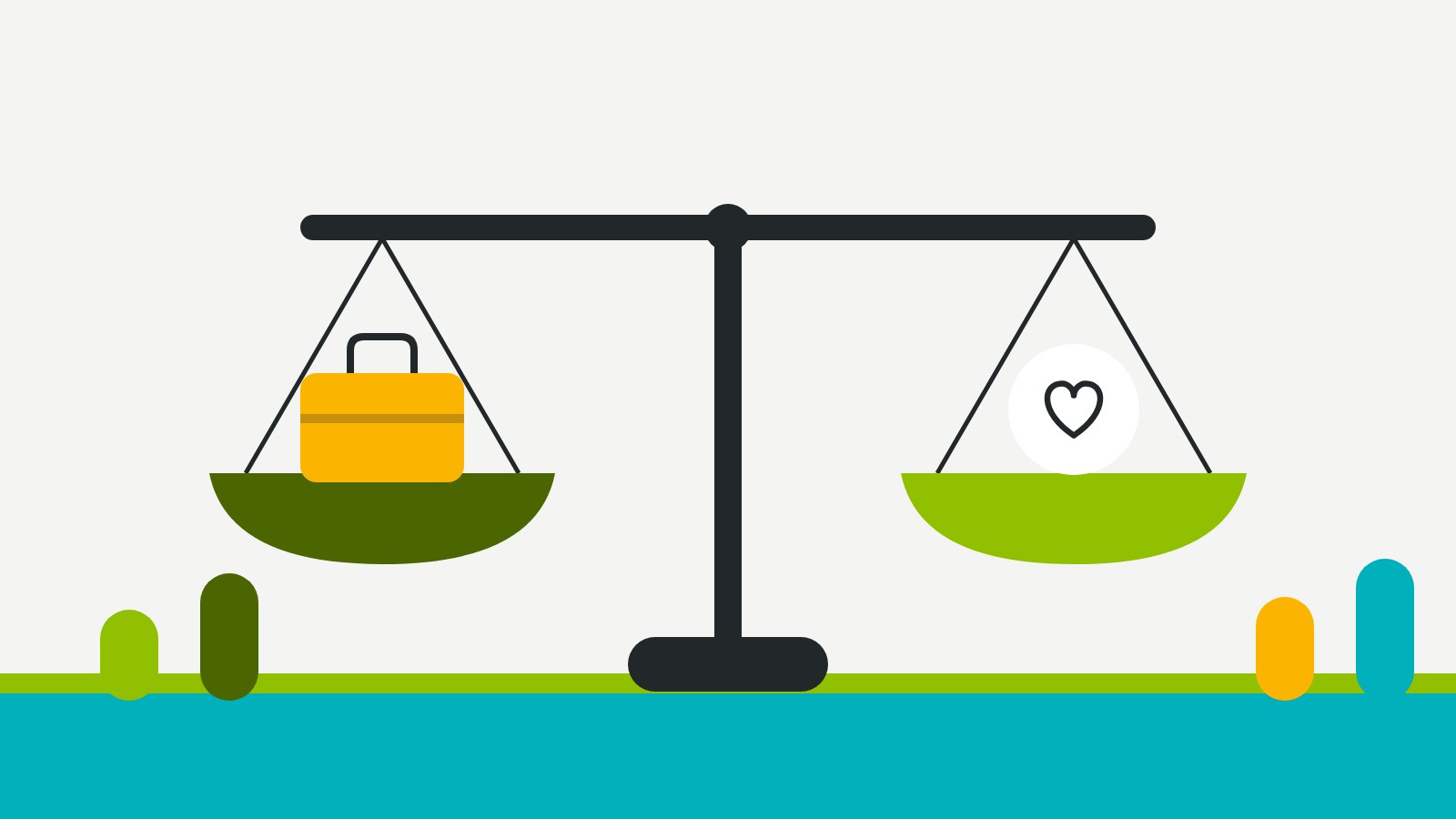
- Pay an agency for ongoing, high-stakes work that can't pause, and use in-kind help for scoped projects that end with a system you keep.
- In-kind help is free to pay for and still asks for staff time to brief, review and take over the work.
- A written scope with one result, a deadline, an approver and a hand-over is what makes either kind of help finish.
A small nonprofit should pay an agency for ongoing, high-stakes work it can't run itself, and use in-kind help for scoped projects that end with something the team keeps running.
Skilled help is easier to find than most teams think. More than 75.7 million people volunteered through an organization in the latest national count, and a growing share of them bring professional skills in marketing, design and data. The question for a small charity isn't if help exists. It's which kind of help fits the job in front of you, because the wrong choice costs months either way.
Agencies and in-kind programs solve different problems. The rest of this guide sets out which jobs need a paid partner, which can be done well for free and how to keep control of your marketing whichever route you take. If a scoped project sounds right, in-kind help is one place to start.
When a small nonprofit needs a marketing agency
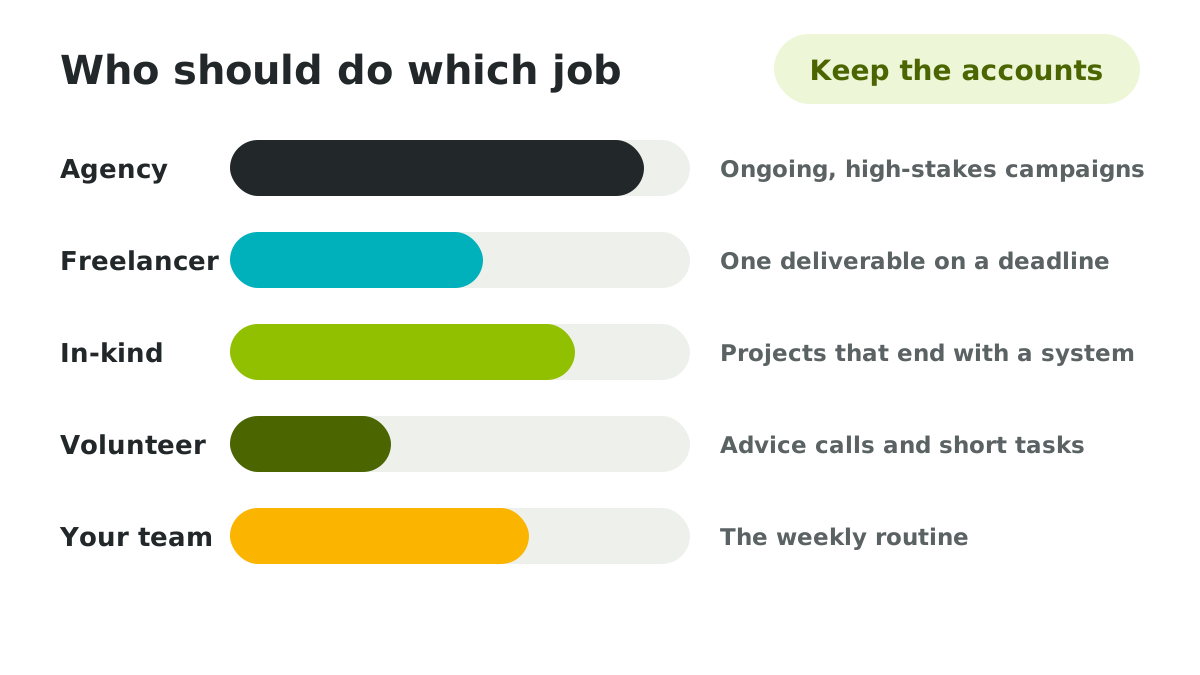
A nonprofit needs an agency when the work is ongoing, time-sensitive and too important to pause. Large paid campaigns, a major rebrand under a deadline or a crisis that needs a response today all call for a partner who's contracted to show up every week.
Picture a health charity launching a capital campaign with a firm close date and a six-figure paid media budget. The ads need daily attention, the creative has to be ready on schedule and someone has to answer for the results. A volunteer, however skilled, can't promise that level of availability. That's where paying for accountability makes sense.
Agencies also make sense when you've outgrown a do-it-yourself setup and have the budget to keep a partner for a year or more. Short agency engagements rarely pay back the time it takes to brief them.
When in-kind help is the better fit
In-kind help fits best when the job has a clear start and end, and the result is something your team can run afterwards. Setting up analytics, building an email template, writing website pages or launching a Google Ad Grant are all projects that finish and keep working.
A literacy program that needs a donor email template and a simple thank-you sequence doesn't need a monthly retainer. It needs a few weeks of skilled work, a hand-over session and a document explaining how to use it. Once that's done, the coordinator runs it in an hour a month. Paying an agency every month for something the team could run itself is money that should be going to programs.
Paying an agency every month for something the team could run itself is money that should be going to programs.
What each kind of help costs a small nonprofit
Cost isn't only money. In-kind help is free to pay for and still asks for staff time to brief, review and take over the work. Agencies charge fees and save some of that time. The table compares the real costs side by side.
| Kind of help | What you pay | What it asks of your team | Best for |
| Marketing agency on retainer | A monthly fee, often for a year or more | Regular briefings and approvals | Ongoing, high-stakes campaigns with deadlines |
| Freelancer for a single project | A one-time project fee | A clear brief and a review round | One defined deliverable such as a brochure or a site update |
| Single skilled volunteer | Nothing in fees | Finding, briefing and keeping them engaged | Short tasks and advice calls |
| Mentored in-kind project | Nothing in fees | Briefing, review and a hand-over session | Building a system your team will run afterwards |
| Doing it yourself | Only staff time | Learning as you go | Small, steady routines once a system exists |
Skilled time has real value even when it's free to you. Independent Sector puts the value of a volunteer hour at $36.14, so a forty-hour in-kind project is worth well over a thousand dollars in time alone. Treat it with the same seriousness you'd give a paid contract.
Not sure which row fits? The picker below asks five quick questions and suggests the kind of help to look for first.
Questions to ask before you hire or accept help
Ask every helper, paid or free, the same few questions before you start. Who will do the work, who reviews it, what you'll have at the end and what happens after the last meeting. The answers tell you more than any portfolio.
An animal rescue choosing between an agency and a volunteer web designer might find the agency offers a team and a monthly fee while the volunteer offers talent and evenings. Neither answer is wrong. What matters is that the rescue knows who will fix the site when it breaks in March, and that answer should be in writing before work begins.
Ask to see something the helper built that's still running a year later. A site that launched well and broke in six months tells you more than a polished case for a new project. Anyone who can point to work still in use understands hand-over, and that's the skill a small team needs most.
How to scope a project so it actually finishes
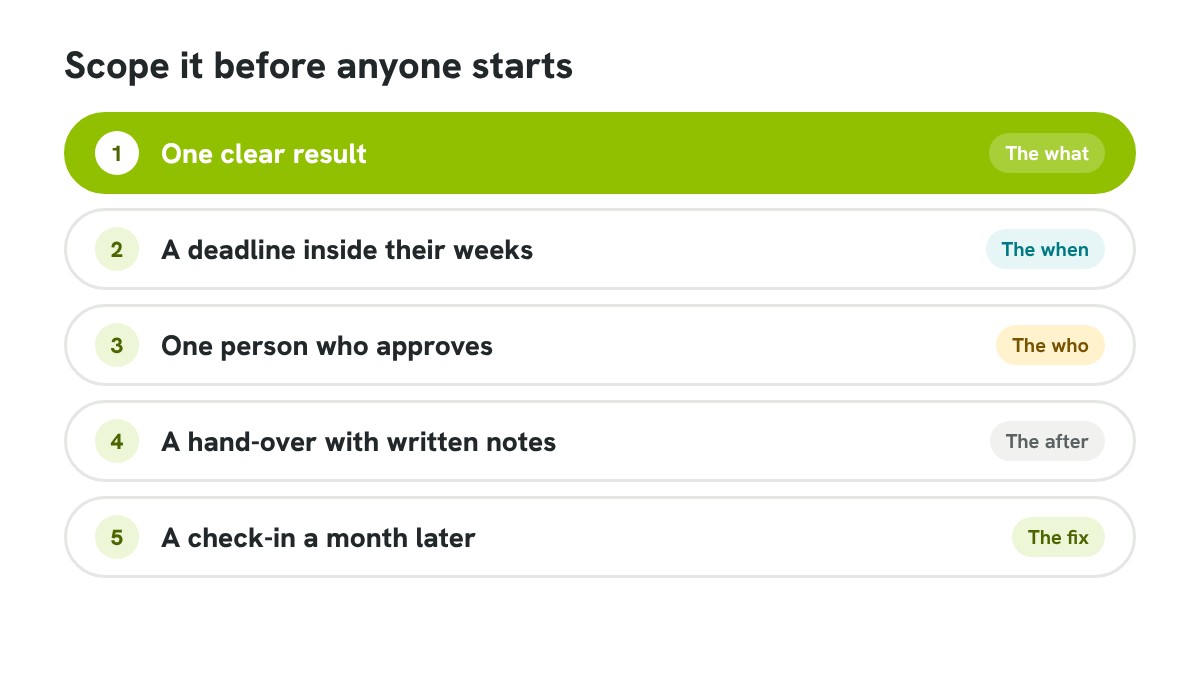
Projects finish when the scope is written down before anyone starts. A short scope names the result, the deadline and who decides when it's done, and it protects both your team and the people helping you.
- One clear result, such as a working email template or five new website pages
- A deadline that sits inside the helper's available weeks
- One person on your team who reviews and approves the work
- A hand-over session with written instructions your team can follow
- A short check-in a month later to fix anything that didn't stick
Unscoped projects drift, and drifting projects are why so many volunteer efforts stall halfway. Ten minutes on a scope saves weeks of chasing.
Mixing paid and in-kind help without losing control
Many small nonprofits do best with a mix of both. In-kind help builds the systems, a small paid budget covers anything that needs guaranteed availability and your own team owns the accounts, passwords and routines in between.
A youth sports charity might use an in-kind project to set up Google Analytics and the Ad Grant, then pay a freelancer for a few hours each quarter to refresh the ads. The charity owns every account, keeps the instructions in a shared folder and can swap either helper without starting again. Ownership is the part that keeps you in control.
Write down who holds each login, from the email platform to the analytics account, and keep that list somewhere two people on your team can reach. When a volunteer moves on or an agency contract ends, nothing goes with them.
Set one rule for every helper on day one. They work inside your accounts, never their own, and they leave written notes for anything they set up. Most helpers welcome the clarity, and it saves a painful rebuild later.
Ownership is the part that keeps you in control.
Choosing the help that fits your next twelve months
Look at the year ahead and sort your marketing work into two lists. Ongoing work that can't pause goes to paid help if you have the budget. Projects that end with a system you'll keep running go to in-kind help. Everything left is your routine.
Where the second list is long, mentored apprentices at Layer Cake Foundation take on scoped projects in kind, with an experienced mentor reviewing every deliverable and a hand-over at the end. Whatever you choose, keep the accounts in your name, write the scope down and pick help that leaves your team stronger than it found it.
Revisit the two lists each year. As your systems mature, more of the work moves into your routine, and the budget you once spent on keeping things running can go toward the next thing worth building.